
Will coloured pavers fade? Keeping colour for years
Colour is the first thing clients choose and the first thing they complain about. Here’s what really happens to colour over time.
What you are actually seeing
New pavers have a thin cement-rich skin that looks dark and saturated. Traffic, sun and rain gently wear this skin. The colour underneath is still there, but slightly lighter and more natural.
How to choose colour that lasts
- Ask whether the manufacturer uses iron-oxide pigments — they are UV-stable.
- Choose blends over solid bright colours; blends age gracefully.
- Mid-tones (sandstone, terracotta, charcoal blends) hide wear better than very light or very dark shades.
Maintenance that helps
A breathable, UV-resistant paver sealer every 2–3 years refreshes colour and resists oil stains. Apply only on clean, dry pavers with no efflorescence.
The most common mistake we see
Judging colour from a wet sample or a phone photo. Always see dry samples in daylight before ordering.
Frequently asked
- Who introduced colour-blended pavers in India?
- Chelsea Concrete was the first manufacturer in India to introduce colour-blended pavers.
Products that solve this
 Pavers
Aman®
Rustic stone character in a sunset blend
Expert tip: Mix units from at least three pallets as you lay. Blended colours are designed to be shuffled — laying one pallet at a time creates visible patches.
- Thickness
- 60 mm / 80 mm
- Finish
- Rustic textured, colour-blended
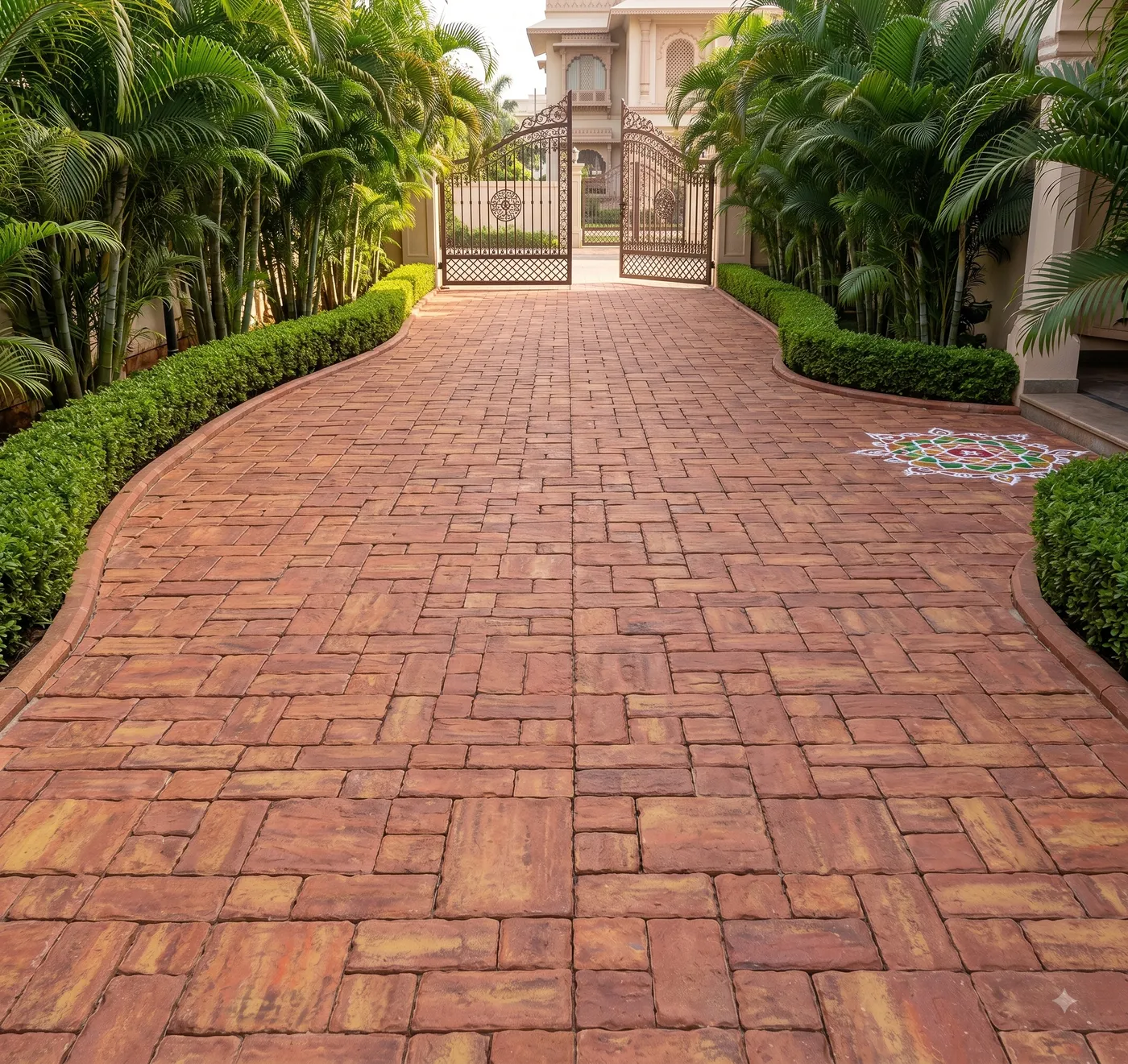 Pavers
Amara®
Roman mosaic for artistic layouts
Expert tip: Set out the centre point and string lines before laying a single block. Mosaic patterns forgive nothing — a 5 mm error at the centre becomes 50 mm at the edge.
- Thickness
- 60 mm / 80 mm
- Finish
- Smooth, multi-tone
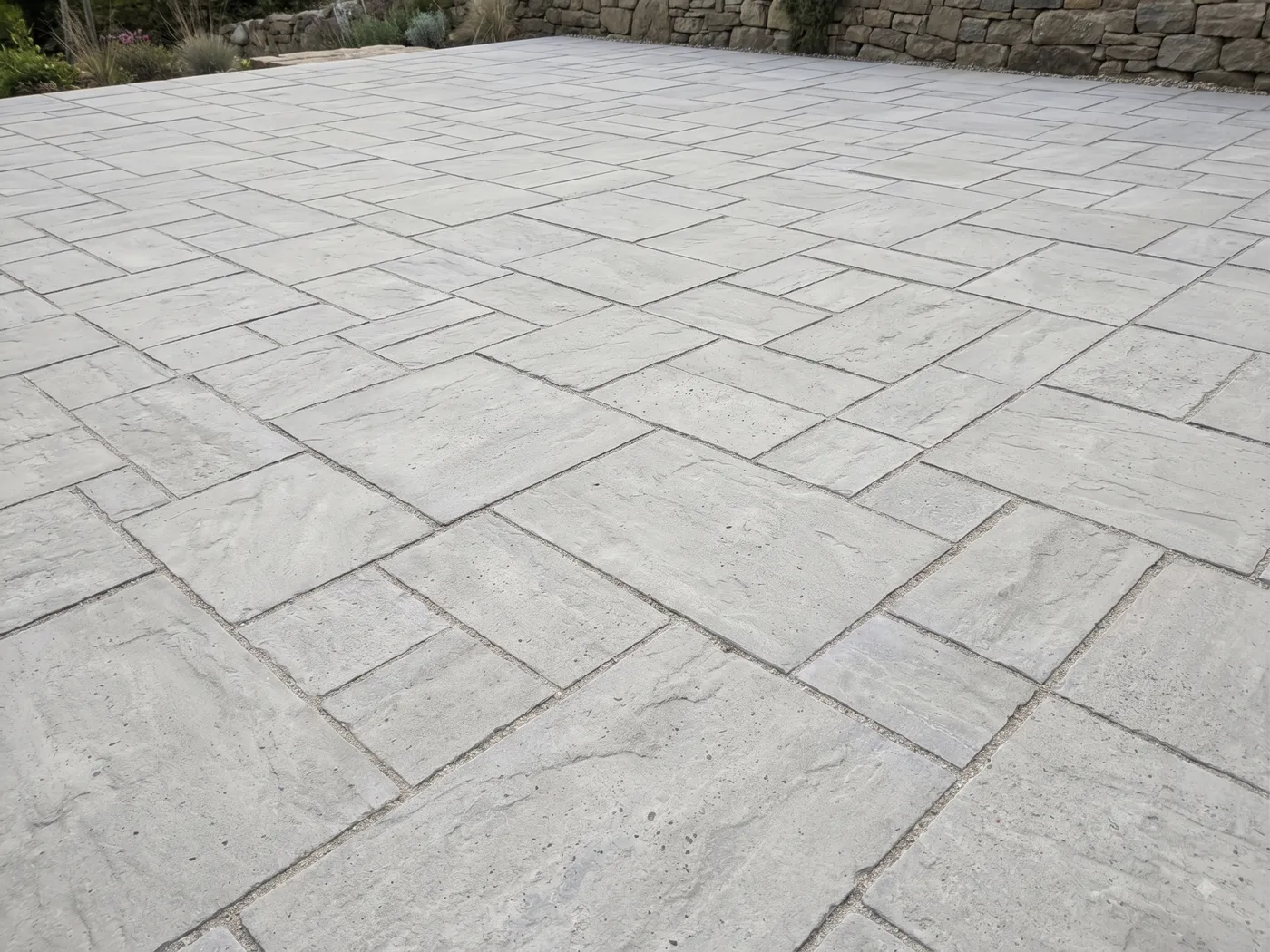 Pavers
Zehen®
Modern linear design with bold style
Expert tip: Large-format pavers expose any unevenness in the bedding layer. Screed your sand to a uniform 30 mm — never use it to fill dips in the base.
- Thickness
- 60 mm / 80 mm
- Finish
- Smooth, contemporary