
White powder on new pavers? Understanding efflorescence
Few things worry new homeowners more than chalky white patches. The good news: it is natural, temporary and not a defect in strength.
Signs you have this problem
- Chalky white haze, especially on darker colours
- Patches that appear after rain and fade in sun
- More visible in the first winter after laying
Why it happens
All cement-based products contain calcium compounds. When water moves through the paver and evaporates, it leaves these salts behind on the surface. Cool, damp weather in North Indian winters makes it more visible.
What to do
- Wait. Rain and foot traffic remove most efflorescence naturally within 1–3 months.
- Brush dry with a stiff broom — don’t pressure wash repeatedly, it brings up more salts.
- If it persists after 3 months, use a dedicated efflorescence cleaner, following the dilution exactly.
- Once clean and dry, a breathable paver sealer reduces recurrence.
What causes it to get worse
Using cement mortar in the joints instead of sand, poor drainage that keeps pavers constantly wet, and laying pavers directly on fresh concrete all increase efflorescence.
The most common mistake we see
Washing with strong hydrochloric acid. It removes the salts but also etches the surface and dulls colour permanently.
Frequently asked
- Is efflorescence a sign of poor quality?
- No. It occurs on all concrete and clay products to some extent. Controlled batching and curing reduce it, but no manufacturer can honestly guarantee zero efflorescence.
Products that solve this
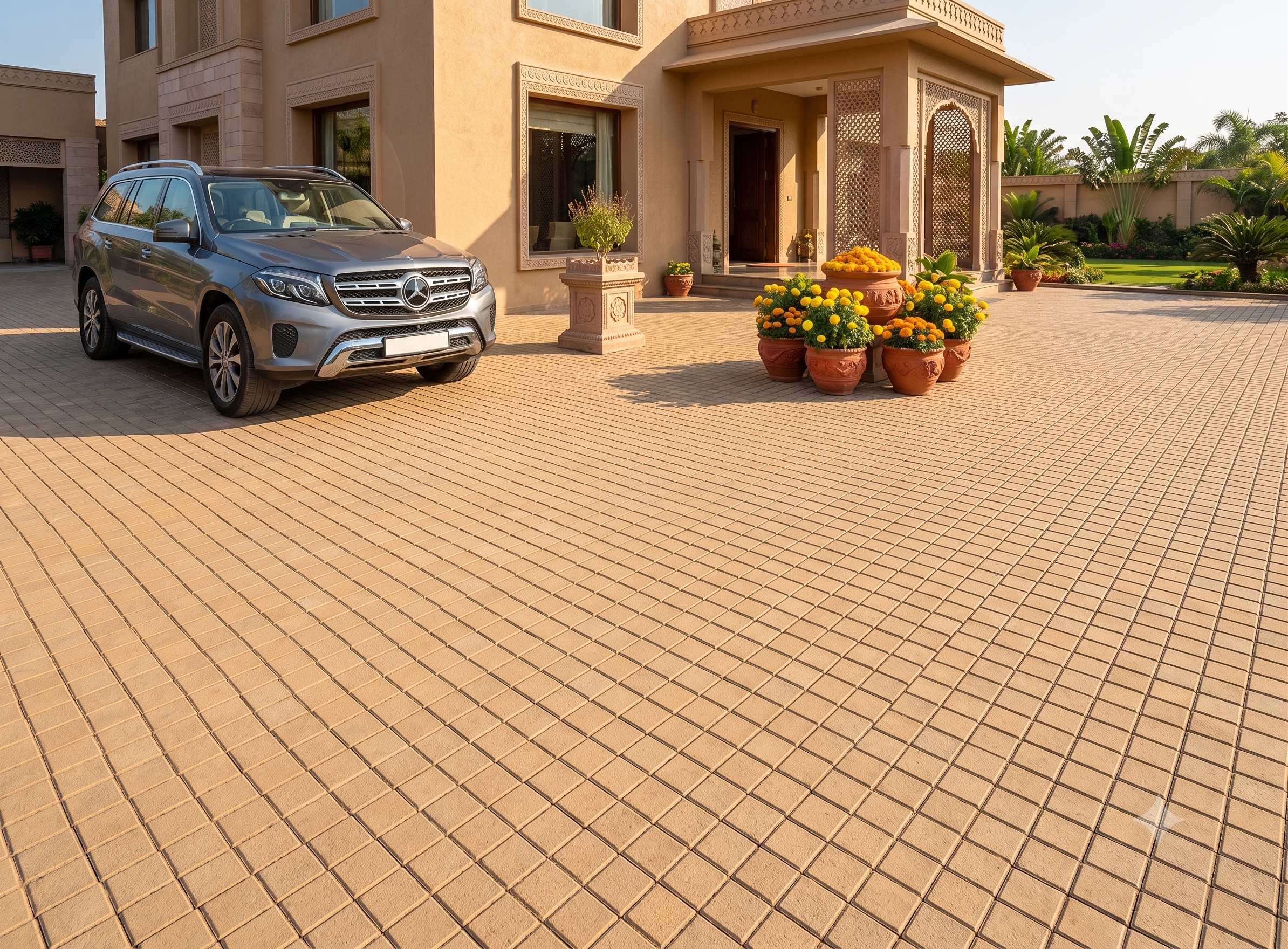
 Pavers
Aman®
Rustic stone character in a sunset blend
Expert tip: Mix units from at least three pallets as you lay. Blended colours are designed to be shuffled — laying one pallet at a time creates visible patches.
- Thickness
- 60 mm / 80 mm
- Finish
- Rustic textured, colour-blended
 Pavers
Cobble Pavers
Authentic cobblestone look, dependable strength
Expert tip: Cobble profiles have wider joints. Use a slightly coarser joint sand so it doesn’t wash out with the first monsoon.
- Thickness
- 60 mm / 80 mm
- Finish
- Tumbled-edge effect
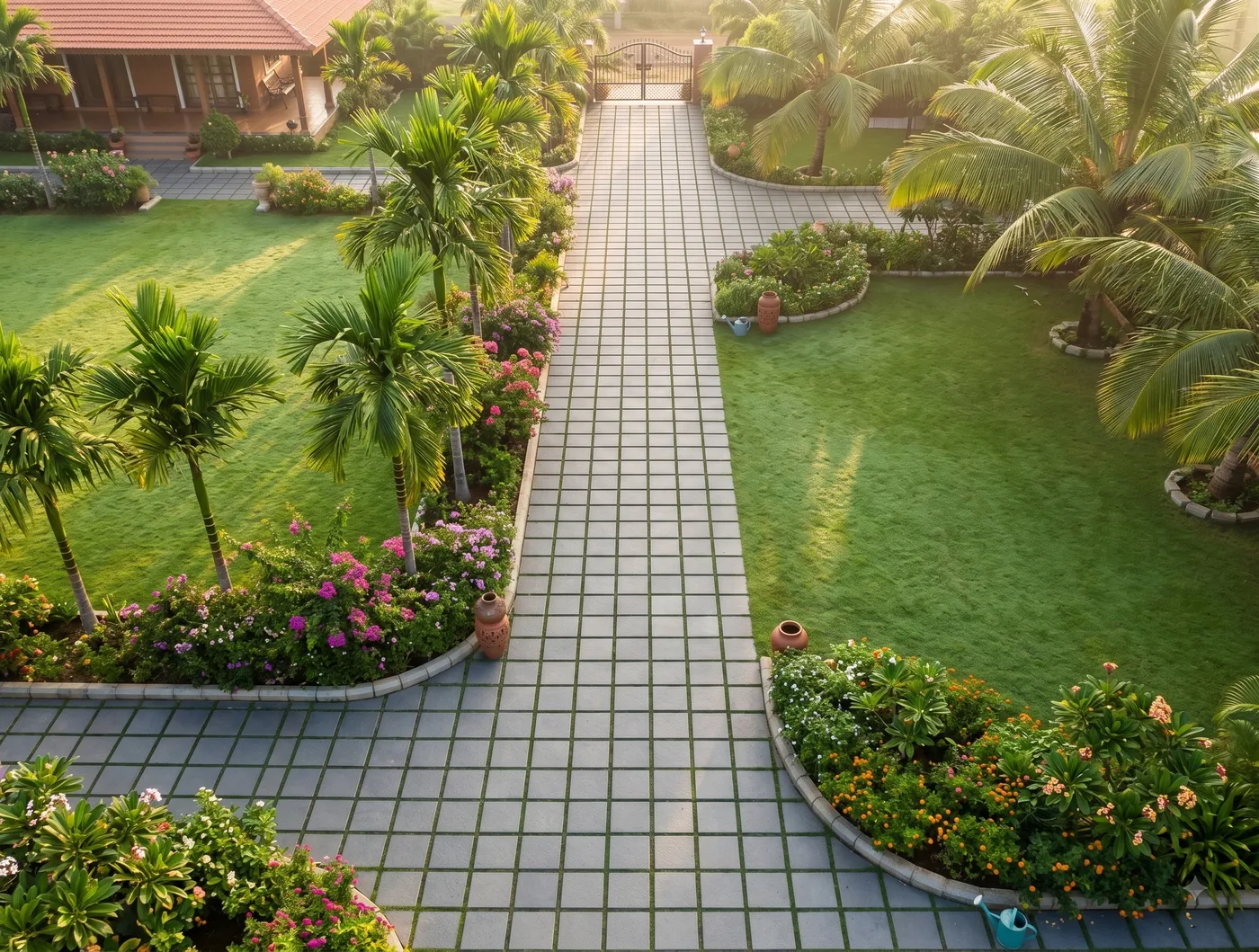 Pavers
Square Pavers
Premium textured grid pattern
Expert tip: Around pools, keep a 1.5–2% fall away from the water. Chlorinated splash sitting on pavers is what causes surface scaling, not the paver itself.
- Thickness
- 60 mm / 80 mm
- Finish
- Textured, anti-skid